Even a tiny amount of nitrogen can affect product quality, damage equipment, or reduce process efficiency. In many industries, a few parts per million (ppm) can make the difference between meeting quality standards and facing costly failures.
That is why accurate nitrogen measurement has become a key part of modern industrial operations. A trace nitrogen analyzer helps businesses monitor extremely low nitrogen levels with speed and precision. It supports better process control, safer operations, and consistent product quality.
This guide explains how these analyzers work, where they are used, what technologies are available, and the features to consider before investing in one. Whether you work in manufacturing, electronics, energy, or gas production, this guide will help you make an informed decision.
What Is a Trace Nitrogen Analyzer?
It is an instrument that is used to measure extremely low concentrations of nitrogen in gaseous forms. While ordinary nitrogen analyzers measure high concentrations of nitrogen, it measures extremely low concentrations, usually from parts per million to parts per billion.
This sensitivity of the instrument is due to its use in industries where any slight presence of nitrogen would pose danger to safety, production, or quality of products.
An example of such industries would be that of semiconductors, which require ultra-high purity of process gases. Any presence of nitrogen will reduce the quality of wafers, hence production losses. Gas suppliers use this type of instrument in verifying the purity of their products before releasing them to the market.
Why Is Trace Nitrogen Measurement Critical?
Even small amounts of nitrogen can affect product quality, safety, and process efficiency. Continuous monitoring helps businesses detect contamination before it causes costly problems.
Product Quality
Several industries make use of ultra-high-purity gases to ensure consistent production. The presence of trace amounts of nitrogen reduces the quality of the products produced.
Process Safety
For chemical plants and hydrogen production processes, gas purity is essential. Continuous monitoring can help identify changes in gas purity, including possible air ingress or contamination.
Regulatory Compliance
Several industries have very high standards when it comes to quality. Nitrogen measurements help in ensuring regulatory compliance during inspections.
Lower Operating Costs
Early detection of gas purity ensures no wastage of products or unexpected downtimes. This leads to reduced operating costs.
How Does a Trace Nitrogen Analyzer Work?
A trace nitrogen analyzer measures the amount of nitrogen present in a gas sample with high accuracy. While the sensing technology may vary, most analyzers follow the same basic measurement process.
Typical Measurement Process
- The gas sample enters the analyzer through the sampling system.
- Moisture and particles are removed to protect the sensor.
- The cleaned gas passes through the sensing chamber.
- The sensor measures the trace nitrogen concentration.
- The controller processes the signal into a digital reading.
- The result is displayed or transmitted to a PLC or SCADA system.
Most modern analyzers also provide real-time monitoring, alarms, and remote data access for continuous process control.
Trace Nitrogen Analyzer Technologies
Different trace nitrogen analyzer technologies suit different applications. The best option depends on the required accuracy, detection range, and process conditions.
Thermal Conductivity Detector (TCD)
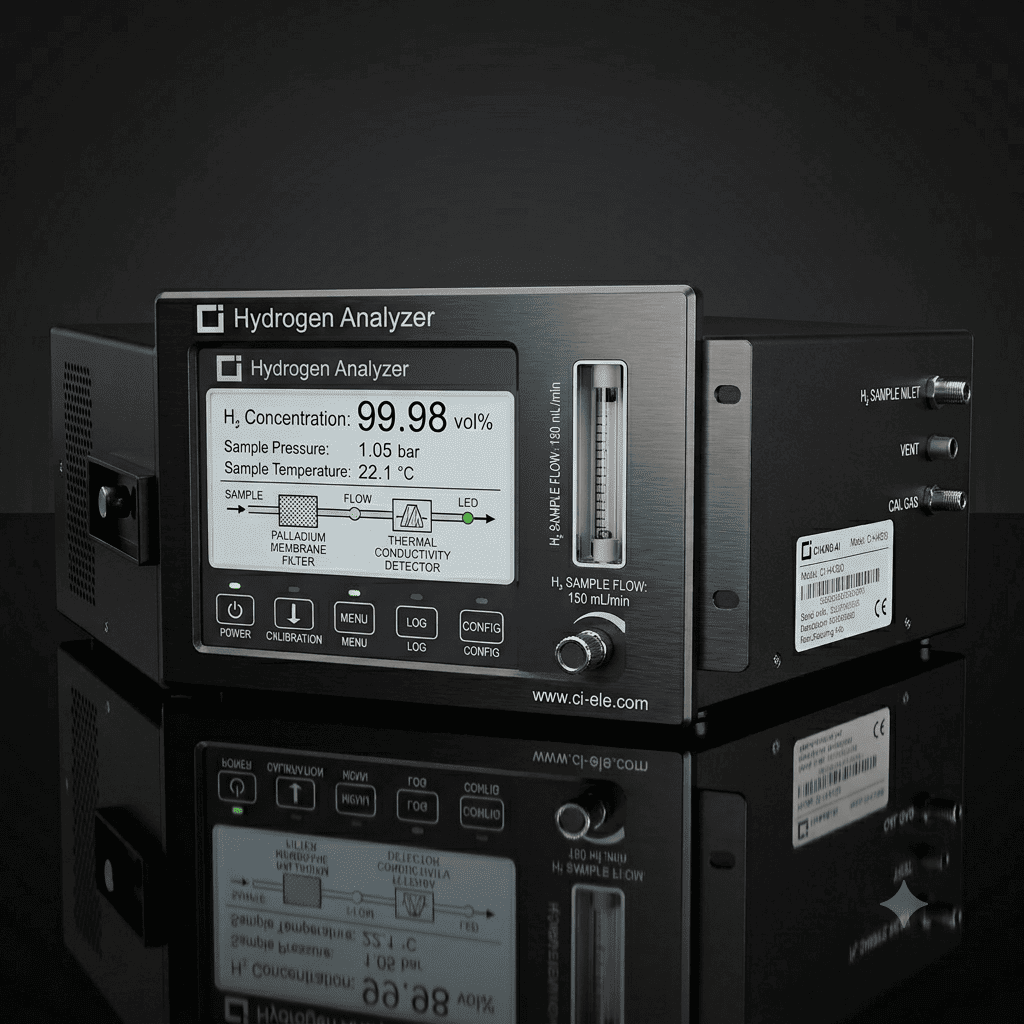
This detector works by comparing the thermal conductivity of the sample gas with that of the reference gas. This detector is accurate, has an extended lifetime, and is mostly used for high-purity gases and hydrogen.
Gas Chromatography (GC)
This method works by first separating the components in the gas and then detecting the amount of nitrogen in the gas. This is a highly accurate and repeatable process, but it takes time and also needs maintenance.
Plasma Emission Detection
In this method, the presence of nitrogen is detected through the emission of light from the excited gas molecules. Plasma emission detection can provide very low detection limits for nitrogen in suitable applications.
Mass Spectrometry
Mass spectrometry measures gases based on their molecular mass and offers very high accuracy. It is mainly used in laboratories and specialised industrial applications.
Trace Nitrogen Analyzer vs Standard Nitrogen Analyzer
| Feature | Trace Nitrogen Analyzer | Standard Nitrogen Analyzer |
| Measurement Range | Parts per million (ppm) or parts per billion (ppb) | Percentage (%) nitrogen levels |
| Purpose | Detects very low nitrogen concentrations | Measures normal or high nitrogen concentrations |
| Accuracy | Very high for trace measurements | Suitable for general measurements |
| Applications | High-purity gases, semiconductors, hydrogen, pharmaceuticals | General manufacturing, combustion, and process monitoring |
| Response Sensitivity | Detects small changes quickly | Designed for larger concentration changes |
| Cost | Higher due to advanced sensing technology | More affordable for standard applications |
| Best For | Industries requiring ultra-high gas purity | Routine nitrogen measurement in industrial processes |
Industries That Use Trace Nitrogen Analyzers
It is essential in industries where gas purity directly affects quality, safety, and efficiency. Continuous monitoring helps prevent contamination and keeps critical processes running smoothly.
Semiconductor Manufacturing
The manufacturing of semiconductors needs extremely pure gases to shield delicate components from damage. Trace nitrogen detection assists in achieving higher productivity.
Industrial Gas Production
Gas manufacturers use trace nitrogen analyzers to confirm purity before releasing products for sale. This helps guarantee that they meet customer requirements.
Petrochemical and Chemical Plants
Consistency of chemical processes is dependent on composition of gas that is accurate. Consistent monitoring can help to identify the presence of contaminants before affecting production.
Hydrogen Production
Hydrogen applications demand high purity of gases in order to work safely and effectively. It can be used to monitor contamination and stabilise production.
Pharmaceutical Manufacturing
High purity gases have many applications in the pharmaceutical industry. Monitoring the level of nitrogen plays an important role in this process.
Food and Beverage Processing
Nitrogen is used in the processing of foods where the gases are required for packaging foods. Nitrogen purity monitoring helps in providing consistency in packaging.
Power Generation
Gas generators in power plants use different gases for different processes and equipment. Measurement of nitrogen helps in ensuring their efficient working.
Benefits of Installing a Trace Nitrogen Analyzer
Having an analyzer is not just about measuring the purity of the gases for a business. There are numerous benefits that an analyzer can have on both the process itself and operations as a whole.
- High-Quality Product: Keeps the purity level of the gas consistent for high-quality products.
- Process Control: Offers real-time data to make timely responses to process changes.
- Prevention of Equipment Damage: Helps detect contamination in time to prevent further problems.
- Lower Operating Expenses: Reduces the cost of maintenance, rework, and waste.
- Higher Safety Level: Detects abnormalities in nitrogen content levels in time.
- Long-Life Performance: Provides consistent and dependable results during many years of operation.
Therefore, the installation of a trace nitrogen analyzer makes the operations efficient, safe, and reliable with minimal operating expenses.
Key Features to Consider Before Buying
Choosing the right analyzer depends on your application and process requirements. Looking beyond the price helps ensure reliable performance and long-term value.
Detection Range
Choose an analyzer with a measurement range that matches your application. High-purity processes may require ppb detection, while others only need ppm measurement.
Accuracy and Repeatability
Reliable analyzers provide accurate and consistent readings over time. The system operates to keep both product quality and process stability at their highest levels.
Response Time
A fast response allows operators to detect contamination quickly. The system needs this feature to function correctly in its continuous production setup.
Sample Compatibility
Ensure the analyzer is suitable for your process gas and operating conditions. The system operates to keep measurement accuracy at its highest level while maintaining measurement reliability.
Digital Connectivity
Look for communication options such as Modbus, Ethernet, RS-485, PLC, or SCADA integration. These features support remote monitoring and data collection.
Alarm Functions
Configurable alarms alert operators when nitrogen levels exceed preset limits. The system enables staff to perform quick problem solutions which defends the manufacturing process from potential risks.
Ease of Maintenance
Choose a system with simple calibration, easy sensor replacement, and user-friendly software. Lower maintenance requirements help reduce operating costs over time.
Online vs Portable Trace Nitrogen Analyzer
| Feature | Online Trace Nitrogen Analyzer | Portable Trace Nitrogen Analyzer |
| Operation | Continuous, real-time monitoring | Spot checks and temporary measurements |
| Installation | Permanently installed in the process line | Handheld or easy to carry between locations |
| Best For | Manufacturing plants, gas production, and continuous process monitoring | Maintenance, troubleshooting, and field inspections |
| Response | Provides instant alerts and continuous data | Manual measurements when required |
| Connectivity | Integrates with PLC, SCADA, and control systems | Limited or standalone operation |
| Cost | Higher initial investment | Lower initial investment |
| Main Advantage | Continuous process control and automated monitoring | Flexibility and portability for on-site testing |
Installation Best Practices
Proper installation is essential for accurate and reliable nitrogen measurement. A well-designed sampling system helps the analyzer deliver consistent long-term performance.
Install Close to the Sampling Point
Place the analyzer as close as possible to the sampling point. The time required to obtain results becomes shorter when sample lines get shorter, while contamination risks decrease.
Protect the Sample Gas
Remove dust, moisture, oil, and other contaminants before the gas reaches the sensor. The presence of clean samples enables better measurement results while extending the operational life of sensors.
Maintain Stable Sample Conditions
Keep the sample pressure and flow rate within the manufacturer’s recommended range. The measurement results will stay consistent because the test environment maintains stable conditions.
Prevent Leaks
Inspect all tubing, valves, and fittings for leaks. Small leaks which occur in the system will let atmospheric nitrogen enter the system, which makes reading results less accurate.
Allow Proper Ventilation
Install the analyzer in a well-ventilated area to prevent overheating. Good airflow helps maintain stable operation and prolongs equipment life.
Calibration and Preventive Maintenance
Calibration and maintenance are necessary to maintain the precision and reliability of the analyzer. Regular maintenance will help avoid unpredictable failures and increase equipment lifetime.
- Perform regular calibration of the instrument by using reference certified gases.
- Perform visual inspection of sampling lines for possible leaks, obstructions, or contamination.
- Replace filters according to recommendations to ensure sensors’ proper functioning.
- Check gas flow, alarms, and the general state of the system.
- Documentation of calibration and maintenance will be useful in the future.
Regular preventive maintenance improves measurement accuracy, reduces downtime, and extends the analyzer’s service life.
Common Problems and Troubleshooting
Even with regular maintenance, it may experience occasional issues. Identifying the cause early helps restore accurate measurements and minimise downtime.
Unstable Readings
Leakages of gas, moisture, improper flow rate, or ageing sensors may result in unstable readings. Before replacing any parts, check the sampling system.
Slow Response
Clogged filters, long sample lines, or restricted gas flow can affect measurement time. Cleaning or replacing filters will speed up the process.
False High Nitrogen Readings
Leaks from the air in the sampling system will give false high readings of nitrogen content. Check all tubes and seals for leaks.
Calibration Failures
Inadequate calibration gas, wrong pressure, worn-out sensors, or wrong software settings will cause calibration problems. If the problem persists, replace the sensor.
Communication Errors
Broken cables or wrong network settings will cause communication problems with the control system. Check the wiring and communication parameters to fix the issue.
Industrial Standards and Certifications
Selecting an analyzer requires both consideration of the performance factor as well as conforming to the standards that have been set out by the recognised industry standard body.
- ISO Standards: ISO 9001 certification indicates that the manufacturer operates a certified quality management system.
- CE Marking: The CE-marked analyzers are those that adhere to the European standards on health, safety, and environment.
- Hazardous Areas: ATEX and IECEx certifications indicate that an analyzer is suitable for specified hazardous-area conditions.
- Industry Standards: There are certain standards that are required in industries, including GMP in pharmaceuticals and ISO 22000 in food production.
Choosing a certified analyzer helps businesses maintain compliance, improve safety, and ensure reliable long-term performance.
How to Choose the Right Trace Nitrogen Analyzer
Selecting the right analyzer depends on your application, operating conditions, and performance requirements. Considering a few key factors will help you choose a solution that delivers accurate and reliable results.
Define Your Measurement Range
Know the minimum concentration of nitrogen that should be measured by your system. Select an analyzer that can offer you the necessary range of ppm or ppb measurement.
Understand Your Process Gas
Take into account the nature of the process gas, the pressure and temperature of the gas, as well as moisture content and contamination.
Consider Installation Requirements
Determine whether you need a laboratory or industrial analyzer. Moreover, know if you require an explosion-proof analyzer or continuous analysis.
Evaluate Maintenance Needs
Select a solution that is easy to calibrate, has durable sensors, and has easily available replacement parts. Fewer maintenance costs will save money in the long run.
Review Integration Options
Go for a system that is compatible with PLC, SCADA, and other communication systems. Compatibility makes monitoring and process control easier.
Work with an Experienced Supplier
A professional manufacturer will offer technical support, installation advice, and after-sales services. This ensures maximum efficiency from the analyzer.
Why Businesses in Malaysia Choose Chang Ai Technology
Several organisations in Malaysia rely on Chang Ai Technology for its gas analysis solutions that can be applied in various sectors like electronics, petrochemicals, industrial gases, pharmaceuticals, and manufacturing, among others. It provides various high-quality equipment which is able to give good and consistent performance.
Besides providing equipment, Chang Ai Technology assists customers in selecting a suitable trace nitrogen analyzer by giving professional technical advice. This company also ensures that the equipment is properly installed and maintained.
With dependable products and strong after-sales support, Chang Ai Technology helps businesses maintain gas purity, improve process efficiency, and meet industry quality standards with confidence.
Conclusion
A trace nitrogen analyzer is essential in industries that cannot take chances when it comes to gas purity. Accurate nitrogen analysis will go a long way in protecting the quality of the products, increasing the efficiency of the process, reducing operating costs, and ensuring safe operations. In the manufacture of semiconductors and other gases, accurate nitrogen analysis will help detect any contamination.
Choosing the best analyzer is dependent on several factors, including your requirements, sensitivity levels, operating conditions and maintenance. Understanding these factors and choosing the best analyzer will ensure that you have the best production process in the future.